Cracks in a concrete driveway are common, especially as the surface ages and is exposed to weather, moisture, and daily vehicle use. While some cracks are cosmetic, others can allow water to penetrate the slab and cause long-term damage if left untreated. Understanding concrete driveway crack repair is essential for homeowners to take action early and avoid more costly repairs later.
This guide explains how to repair cracks in a concrete driveway step by step, while also helping you decide when DIY repair is enough and when professional service is the better option.
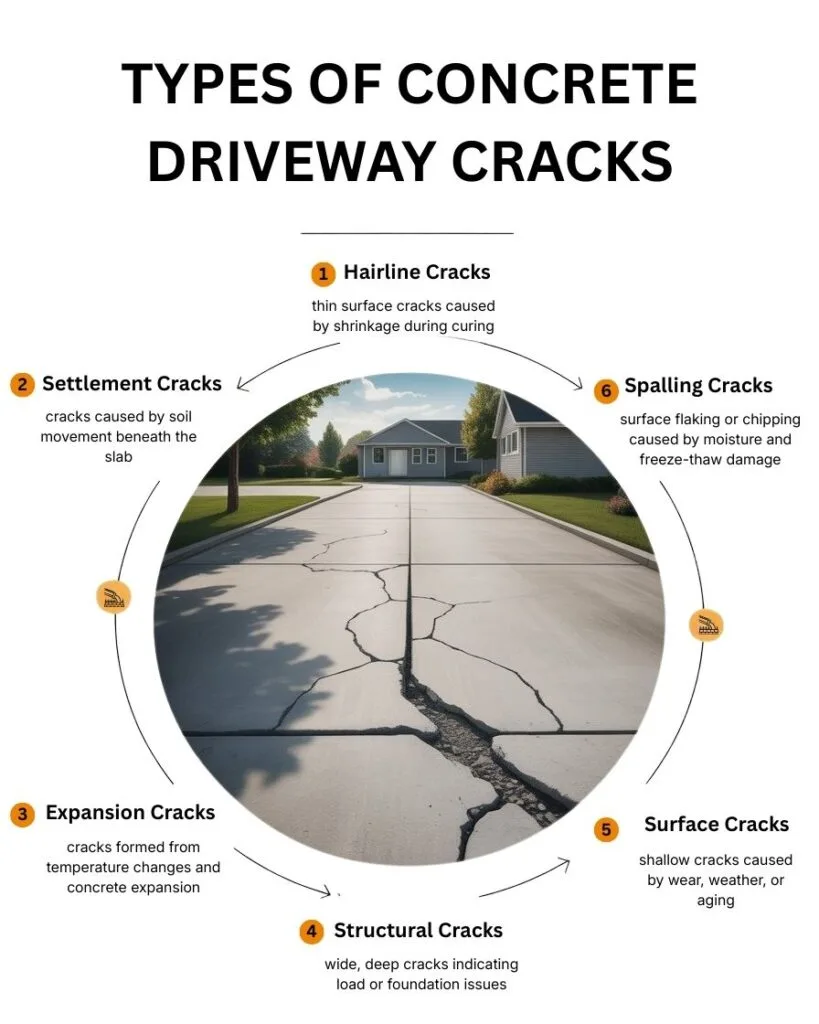
Why Does a Concrete Driveway Crack?
Before starting any cracked driveway repair, it’s important to understand what causes the damage. Common reasons include:
- Natural concrete shrinkage during curing
- Extreme temperature changes and heat exposure
- Soil movement beneath the driveway
- Poor drainage or water infiltration
- Repeated vehicle weight and daily wear
Hairline cracks are often harmless, but wider or expanding cracks may indicate underlying issues that require more than basic repairs.
Repairing Cracks in a Concrete Driveway: Step-by-Step
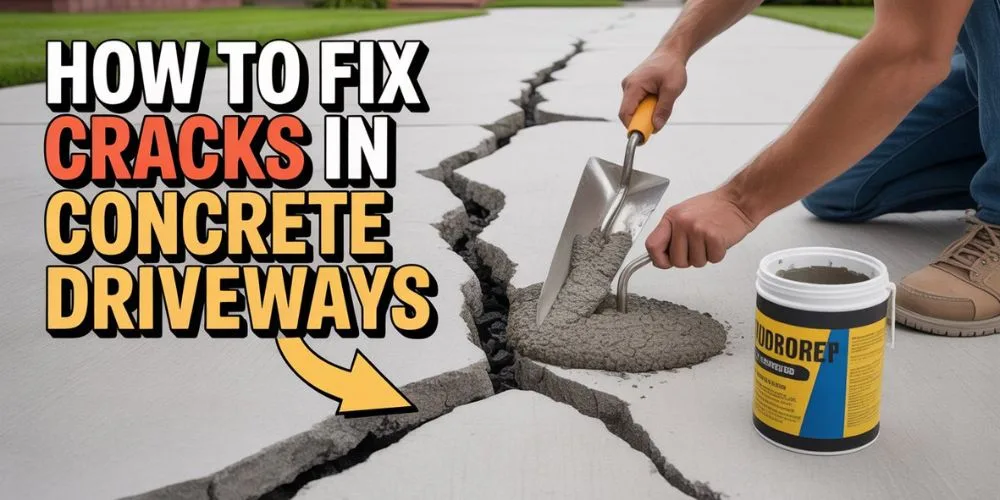
Small to medium cracks can often be repaired by homeowners with proper preparation and materials.
Step 1: Inspect and Measure the Crack
Begin by checking the crack’s width and depth.
- Narrow, shallow cracks are ideal for DIY repair
- Large cracks in a concrete driveway may require extra support or professional evaluation
This inspection determines whether you can safely repair concrete driveway damage on your own.
Step 2: Clean the Crack Thoroughly
Cleaning is essential for long-lasting cracked driveway repair.
- Remove loose concrete with a wire brush or chisel
- Vacuum or blow out dust and debris
- Make sure the crack is clean and dry
A clean surface ensures the repair material bonds properly.
Step 3: Choose the Right Materials to Fix Driveway Cracks
Selecting the correct product improves durability.
- Flexible crack fillers for narrow cracks
- Patch compounds for wider openings
- Backer rod for deep cracks to prevent overfilling
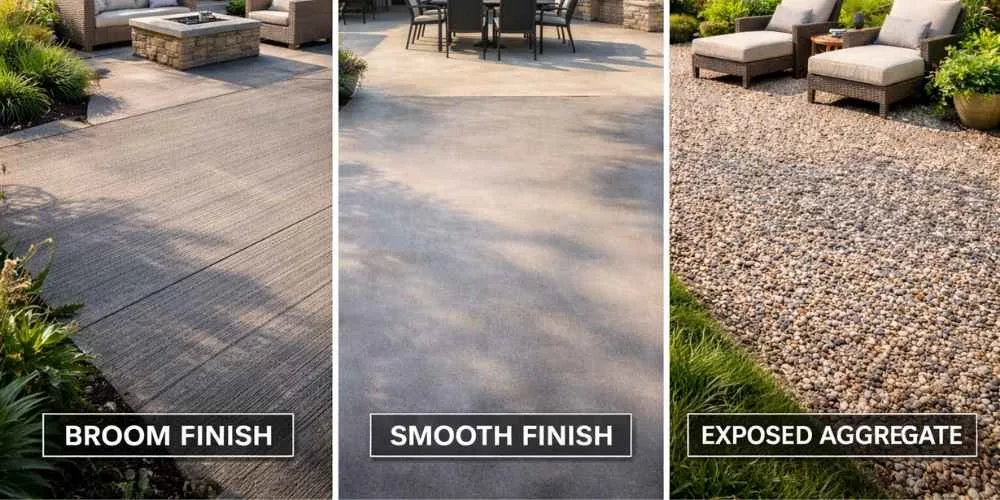
Repair approaches can vary depending on the types of concrete driveways and the surface finish used.
Step 4: Apply the Repair Material
Carefully fill the crack:
- Press material deep into the crack
- Avoid air pockets
- Smooth the surface so it’s level with the driveway
This step is crucial when learning how to fix driveway cracks properly.
Step 5: Allow Proper Curing Time
Curing ensures strength and longevity.
- Keep foot traffic off the area for at least 24 hours
- Avoid vehicles for 48–72 hours
- Follow the manufacturer’s instructions carefully
Rushing this step can weaken the repair.
Pro Tips for Long-Lasting Concrete Crack Repairs
- Avoid rigid patch materials for cracks that may move
- Repair cracks during mild, dry weather
- Fill cracks but avoid excess surface buildup
- Do not allow traffic before full curing
- Consider sealing the driveway after repair
These tips help extend the life of your cracked driveway repair
DIY vs. Professional Concrete Driveway Crack Repair
| Factor | DIY Repair | Professional Repair |
| Crack size | Small to medium | Large or spreading |
| Cost | Lower upfront | Higher, long-term value |
| Tools | Basic homeowner tools | Specialized equipment |
| Structural assessment | Limited | Comprehensive |
| Durability | Moderate | High |
| Best for | Isolated cracks | Structural or recurring issues |
This comparison helps homeowners decide how to repair concrete driveway damage safely and effectively.
When DIY Repair Is Enough for a Cracked Driveway
DIY repair works well when:
- Cracks are narrow and stable
- The driveway surface is level
- Water is not pooling in the area
- Previous repairs have held
In these cases, homeowners can confidently fix concrete driveway cracks and extend the surface’s lifespan.
When to call a professional for concrete driveway cracks
Professional help is recommended if:
- Cracks are wide, deep, or growing
- Sections of the driveway are sinking or uneven
- Repairs fail repeatedly
- Drainage or soil movement is suspected
In such situations, surface patching alone may not be sufficient.
Crack Repair vs. Resurfacing: What to Expect
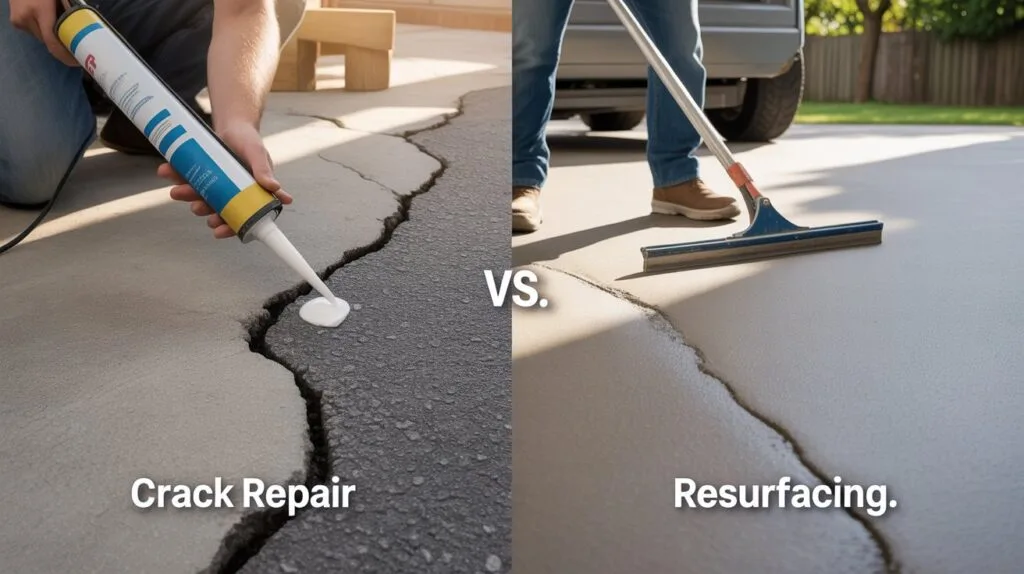
Crack repair targets specific problem areas, while concrete driveway resurfacing improves the surface appearance without fixing structural movement issues. Homeowners comparing driveway concrete vs asphalt should note that concrete repairs focus on durability, while asphalt typically requires more frequent resurfacing and maintenance.
Frequently Asked Questions
- How do you repair cracks in a concrete driveway?
By cleaning the crack, applying the appropriate repair material, smoothing the surface, and allowing proper curing time. - Can large cracks in a concrete driveway be repaired?
Some large cracks can be temporarily repaired, but recurring or deep cracks often require professional solutions. - How long does driveway crack repair last?
With proper materials and sealing, repairs can last several years. - Does heat cause cracks in concrete driveways?
Yes. Prolonged heat causes concrete to expand, which can lead to cracking—especially in areas with unstable soil. - Is it cheaper to repair or replace a concrete driveway?
Repairing is usually cheaper by addressing isolated cracks early, while replacement becomes necessary when damage is widespread, structural, and no longer cost-effective to fix.
Final Thoughts
Cracks are a natural part of concrete aging, but repairing them early helps prevent costly damage and extends your driveway’s lifespan. While minor cracks can often be fixed with DIY methods, larger or recurring issues require professional attention. Rocking S Concrete offers reliable concrete driveway crack repair solutions to protect your investment and keep your driveway durable, safe, and visually appealing for years to come.