
Understanding temperature limits is critical before starting any concrete project. Many homeowners ask: What temperature is too hot to pour concrete?
In general, concrete performs best between 10°C and 30°C (50°F to 86°F). Once temperatures rise above this range, the risk of poor curing, cracking, and reduced strength increases significantly.
Temperature Guidelines for Pouring Concrete:
- Ideal range: 10°C to 30°C
- Caution zone: Above 30°C
- High risk: 32°C (90°F) and higher
In hot regions like San Antonio, summer temperatures frequently exceed safe limits—making planning and proper technique essential.
Why Hot Weather Can Damage Concrete
Concrete strength depends on a slow and controlled curing process. In hot weather, this process speeds up too much, which can weaken the final structure. According to industry standards (such as the American Concrete Institute), high temperatures can lead to rapid moisture loss—one of the biggest threats to durable concrete.
These problems are often caused by poor temperature control. Following the best temperature to pour concrete without cracks in San Antonio can significantly reduce these risks.
Common Problems in Hot Weather:
- Rapid evaporation of surface moisture
- Reduced working and finishing time
- Early surface cracking
- Lower long-term durability
Contractors often see concrete fail prematurely in summer due to improper heat management.
Does Concrete Cure Faster in Hot Weather?
Yes, concrete does cure faster in hot weather—but faster is not better.
When water evaporates too quickly, the cement doesn’t fully hydrate. This leads to weaker concrete that is more likely to crack over time.
Effects of Fast Curing:
- Reduced strength development
- Uneven or rough surface finish
- Increased risk of shrinkage cracks
Key Insight:
Concrete should cure slowly and evenly to reach maximum strength.
Best Time of Day for Pouring Concrete in Hot Weather
Timing can make or break your project in high temperatures.
Best Times:
- Early morning (coolest part of the day)
- Late evening (reduced sun exposure)
Worst Times:
- Midday and afternoon
- Peak sunlight hours
Pouring during cooler hours helps maintain moisture and improves workability.
Best Practices for Pouring Concrete in Hot Weather
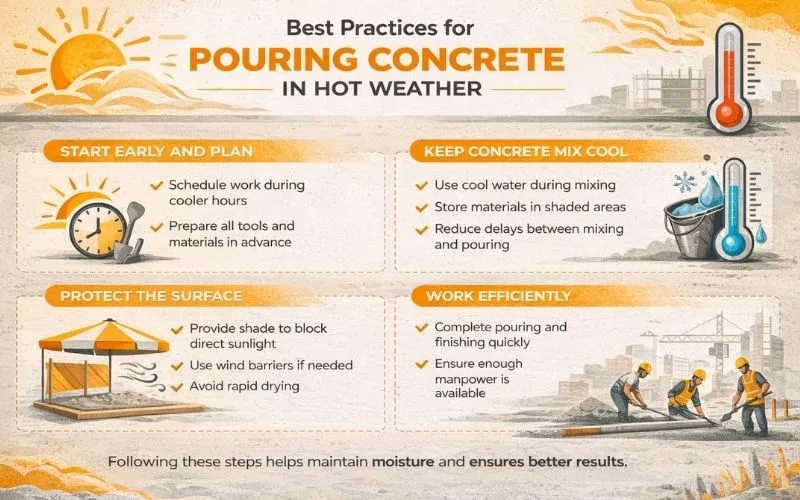
Hot weather doesn’t mean you have to delay your project—but it does require extra precautions.
1. Plan and Prepare Ahead
- Schedule work during cooler hours
- Keep all tools and materials ready
- Minimize delays during pouring
2. Keep the Concrete Mix Cool
- Use cool water when mixing
- Store materials in shaded areas
- Avoid letting the mix sit too long
3. Protect the Concrete Surface
- Use shade or covers to block sunlight
- Install wind barriers if needed
- Prevent rapid drying
4. Work Efficiently
- Ensure enough workers are available
- Complete pouring and finishing quickly
These steps are commonly used by experienced contractors to maintain concrete quality in extreme heat.
Why Proper Concrete Curing Is So Important
Curing is one of the most critical steps in any concrete project—especially in hot weather. Without proper curing, even well-poured concrete can fail.
In hot weather, curing becomes even more critical because moisture can evaporate quickly. Learning how to protect concrete foundations against water damage can also help maintain long-term strength and durability.
Effective Curing Methods:
- Keep the surface continuously moist
- Cover with plastic sheets or wet burlap
- Apply curing compounds
Benefits of Proper Curing:
- Increased strength and durability
- Reduced cracking
- Longer lifespan
Skipping curing is one of the most common and costly mistakes homeowners make.
How Hot Does Concrete Get in the Sun?
Concrete surfaces can become significantly hotter than the surrounding air temperature.
For example:
- Air temperature: 35°C (95°F)
- Concrete surface: Can exceed 50°C (122°F)
Risks of High Surface Temperature:
- Faster moisture loss
- Surface stress and cracking
- Weak finishing results
This is why protecting fresh concrete from direct sunlight is essential.
Hot Weather vs Cold Weather Concrete Pouring
| Condition | Main Risk | Solution |
| Hot Weather | Rapid drying, cracking | Keep concrete cool & moist |
| Cold Weather | Slow curing, freezing | Use warm mix & insulation |
Why This Matters for Your Home
Concrete is a long-term investment, and proper installation ensures it lasts for years. Hot weather can reduce its lifespan if the right precautions are not taken. Homeowners should be aware of the risks before starting any summer project.
Common risks include:
- Early cracking
- Weak surface strength
- Increased repair costs
Taking the right steps from the beginning helps avoid costly repairs in the future.
Work with Local Experts in San Antonio
Concrete work in San Antonio requires knowledge of local weather conditions. Experienced contractors understand how to adjust techniques based on temperature and climate.
At Rocking S Concrete, we follow proven methods to handle hot weather concrete projects and deliver reliable, long-lasting results.
Frequently Asked Questions
1. What temperature is too hot to pour concrete?
Concrete is considered too hot to pour above 30°C (86°F). At 32°C (90°F)+, special precautions are required to prevent cracking and strength loss.
2. Can you pour concrete at 35°C?
Yes, but it’s risky. You must work quickly, keep the mix cool, and use proper curing to avoid damage.
3. Does hot weather weaken concrete?
Yes. High heat speeds up curing, which can reduce strength and increase cracking if not managed properly.
4. What is the best temperature to pour concrete?
The ideal range is 10°C to 30°C (50°F to 86°F) for proper curing and maximum strength.
5. How do you stop concrete from drying too fast?
Keep it moist using water, cover it with plastic sheets, and pour during cooler hours.
6. Is morning or evening better for pouring concrete?
Morning is best, followed by evening, as temperatures are lower and evaporation is reduced.
7. Can hot weather cause concrete to crack?
Yes. Rapid moisture loss in heat leads to shrinkage cracks and weak surfaces.
Final Thoughts
Hot weather can make concrete work more challenging, but it doesn’t mean you have to delay your project. With the right planning and techniques, you can still achieve strong and durable results.
Keep these key points in mind:
- Avoid pouring during extreme heat
- Control moisture throughout the process
- Follow proper curing methods
With the right approach, your concrete project can handle even the toughest summer conditions.